PROPERTY MARKETING · 11 MIN READ
Selling House Signs: Still One of the Best Tools You Have
In a market that lives on phones, a selling house sign still pulls buyers the portals never reach. Here is how they work, what goes on one, where to put it, and what it costs.

Most sellers assume the property for sale sign is a relic. The market moved to realestate.com.au and Domain years ago, so a board on the lawn feels like something from the era before smartphones. That assumption costs people buyers. The humble selling house sign is still one of the cheapest and most reliable pieces of marketing you can run, and it reaches a slice of the buyer pool your online listing simply cannot.
I spent more than 15 years as a licensed agent and called over 2,000 auctions before I built Unreserved. In that time I watched plenty of sales get a kick along from nothing more than a neighbour reading the board and calling their sister. This guide explains how a house for sale sign actually works, whether it still earns its place, what to put on one, where to position it, what it costs, and how it fits with the rest of your property marketing rather than replacing it.
Quick answer: A selling house sign still works because it reaches buyers the portals miss: neighbours, locals who already want the street, and the steady stream of drive-by traffic. It promotes your home 24 hours a day for a fraction of a portal upgrade, usually $100 to $300 for a standard board. Keep the design clean and readable, place it at the front boundary facing the traffic, and run it alongside a strong online listing rather than instead of one.
Do selling house signs still work?
Yes, and the reason is buyer psychology, not nostalgia. Think about how people actually find a home. Most start online, scrolling listings on a phone. But a large group of motivated buyers are not scrolling a portal at all. They are already circling a handful of streets they want to live in, driving past on the school run, walking the dog, visiting family two doors down. The portal cannot reach those people at the exact moment they pass your front gate. A sign can.
There is a second group the sign captures that the internet struggles with: the neighbours. Neighbours are the best unpaid sales force you will ever have. They want a say in who moves in, and they almost always know someone who has been trying to buy into the area. A board goes up, the street starts talking, and that word of mouth puts your home in front of warm buyers who were never going to find you through a keyword search.
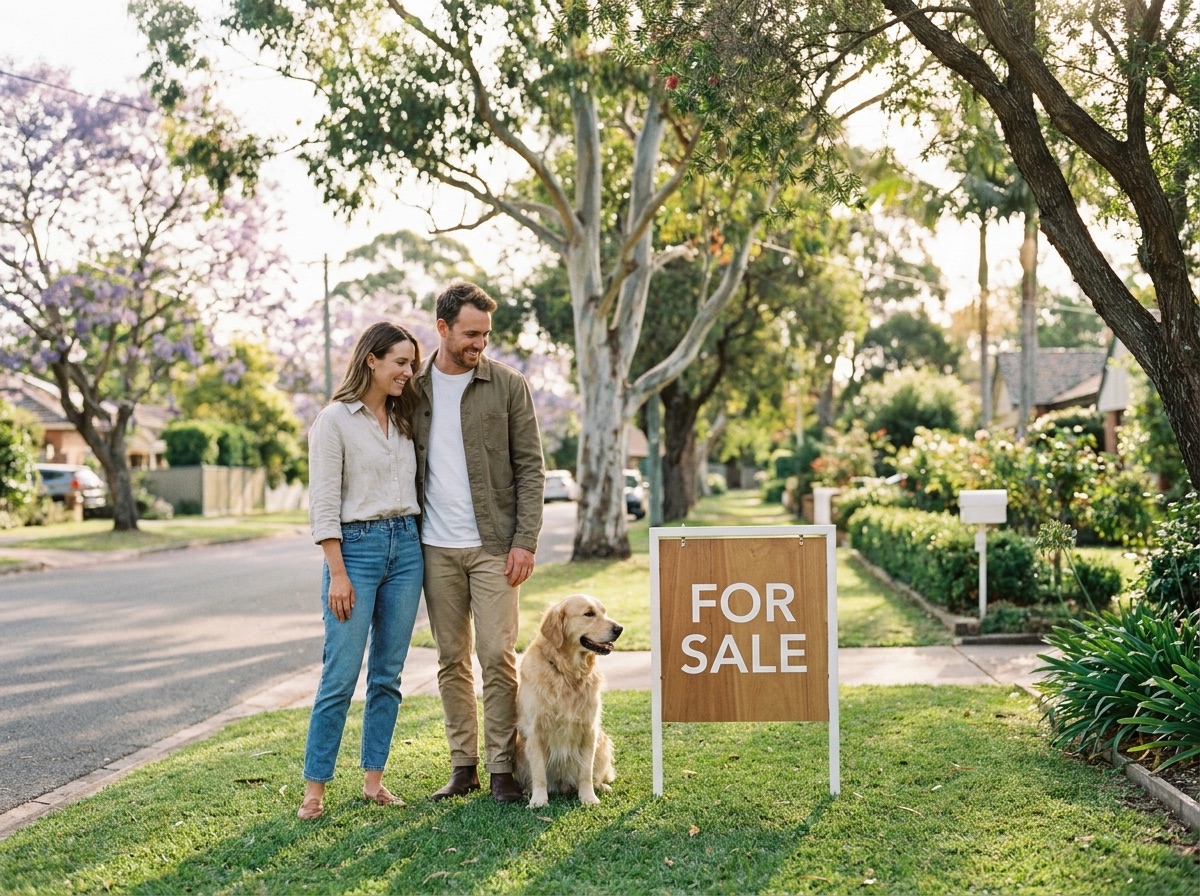
The point is not that a sign beats your online listing. It does not. The portals carry the bulk of your enquiry, and that is where the heavy lifting happens. The point is that a sign covers the gap the portal leaves open, at almost no cost, around the clock. Switching it off to save a couple of hundred dollars shrinks your buyer pool for no good reason.
The benefits of using a selling house sign
A real estate sign earns its keep in a handful of specific ways. None of them are flashy, which is exactly why sellers underrate them.
- It works around the clock. A board promotes your home every hour of every day, in front of everyone who passes, with no ongoing cost once it is installed.
- It reaches local buyers first. The people most likely to pay a strong price are often the ones who already want to live in your suburb. The sign finds them where they live.
- It signals that the home is genuinely for sale. A physical sign carries a credibility an online listing alone does not. It tells the street the campaign is real and active.
- It generates extra enquiry. Drive-by calls and QR scans are enquiries you would never have received from the portal alone. They cost you nothing on top of the board.
- It marks the property at inspection time. When buyers arrive for an open home, the sign confirms they are at the right house and reinforces the listing they saw online.
Put together, these add up to more enquiry for less money than almost any other line in a campaign. That is rare in property marketing, where most of the spend buys prominence rather than reach. I cover where the rest of the money goes in my full guide to real estate advertising costs.
What should a selling house sign include?
The best signs do one job well: they get a passing person to take the next step before they have driven out of sight. That means the design has to be read in about three seconds from a moving car. Clutter kills a sign. Here is what actually belongs on one.
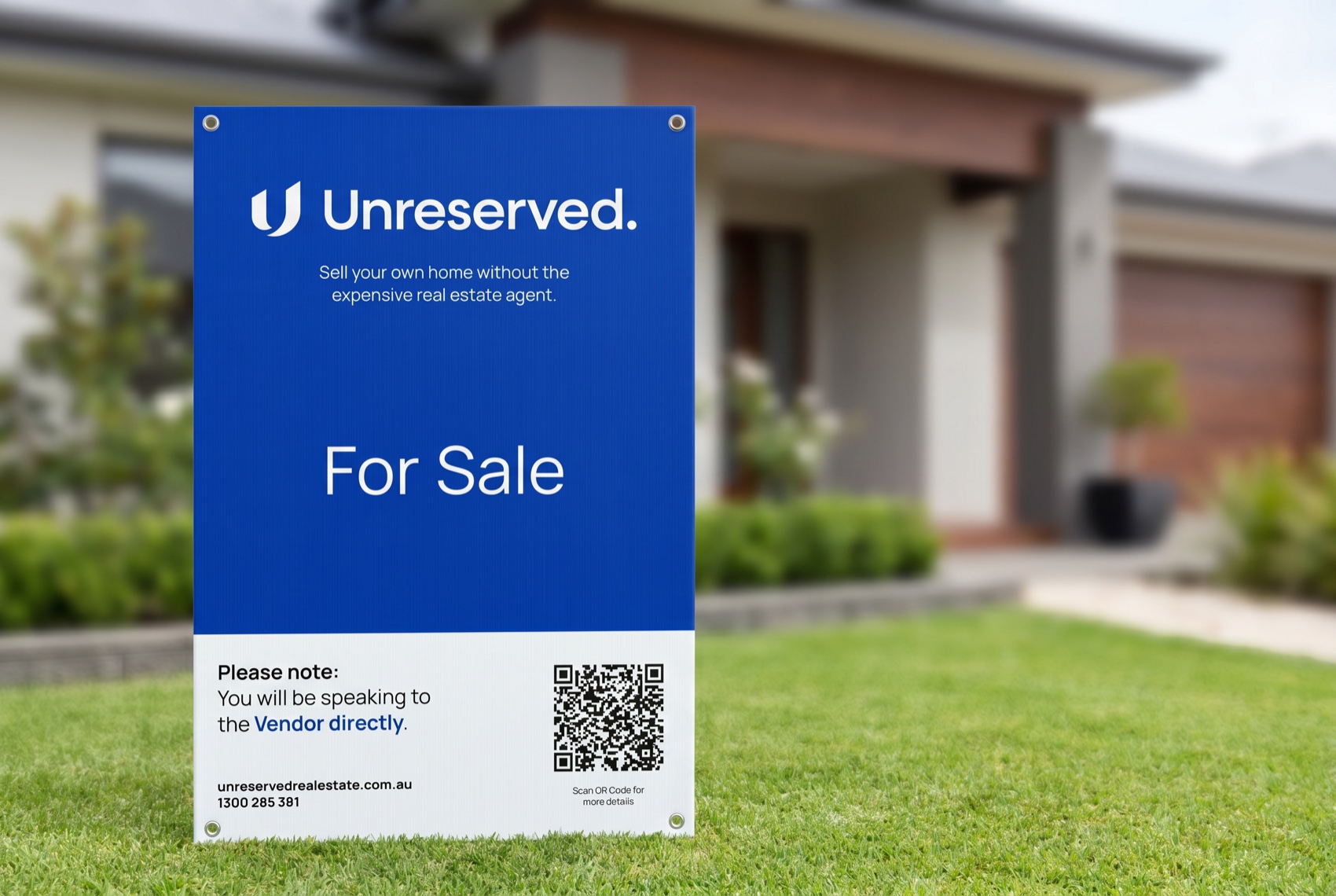
- The words For Sale, large and unmissable. This is the headline. It should be readable from across the road, not buried under everything else.
- One clear way to enquire. A phone number, a website, or both, in type big enough to read or photograph quickly. Do not list four contact options. Pick the one you will actually answer.
- A QR code. This is the single biggest upgrade to a modern property for sale sign. A passer-by scans it and lands directly on your online listing with the photos, the price guide and the inspection times. It turns a glance into a lead.
- One or two genuine selling points. Bedroom and bathroom count, land size, or a feature like “north-facing” or “renovated”. Just enough to qualify interest, not a full description.
- A clean photo, on larger boards. A single strong image of the home lifts a photo board, as long as it does not crowd out the essentials above.
Readability beats everything. High contrast, a clean sans-serif typeface, and plenty of empty space will always outperform a busy board jammed with text. If a driver cannot read it at a glance, none of the detail matters.
Where should you place a selling house sign?
A perfect sign in the wrong spot is wasted money. Placement decides how many people actually see it, so it deserves more thought than most sellers give it.
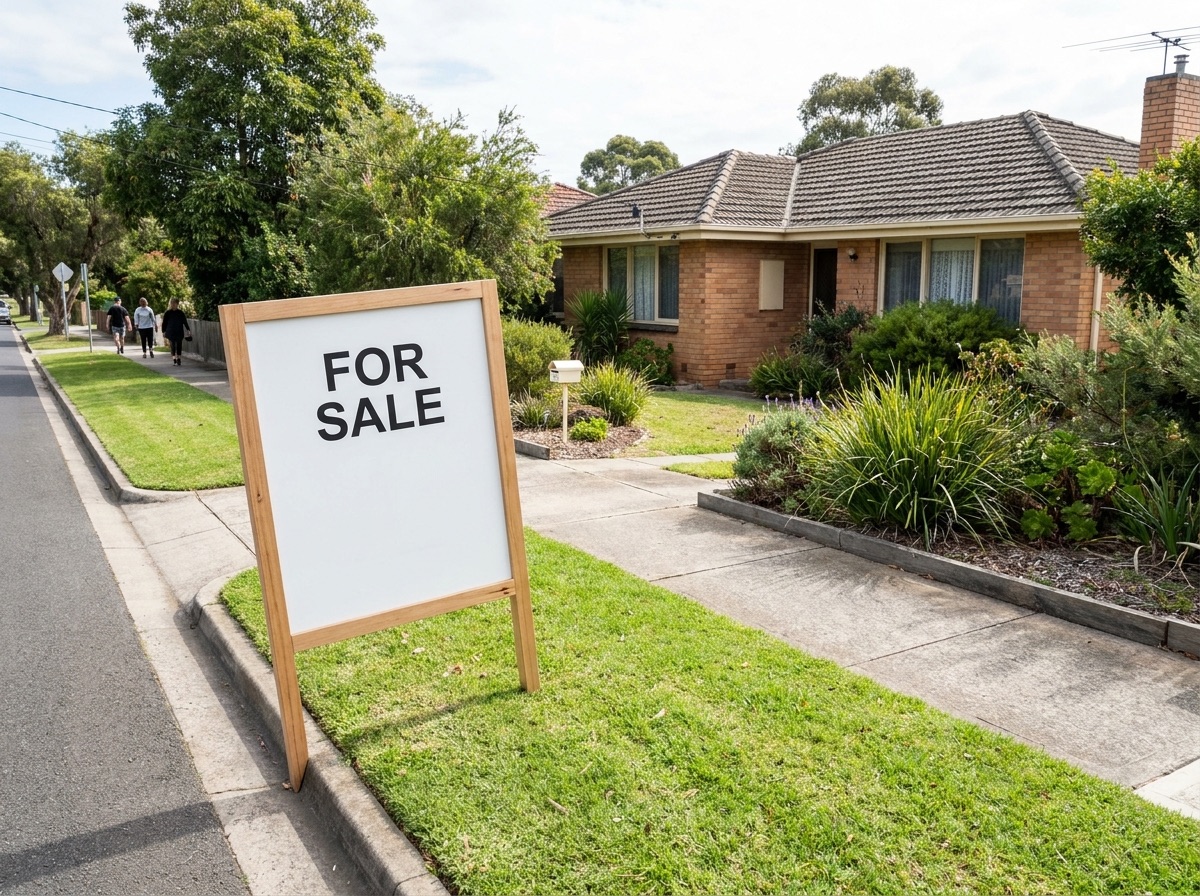
- Front boundary, facing the traffic. Position the board at the front of the property and angle it toward the direction most cars approach from, so it is read head-on rather than edge-on.
- Clear sightline. Keep it clear of hedges, fences, parked cars and overhanging branches. If a hedge hides half the board, you have paid for half a sign.
- The right height. Set it high enough to be seen above a front fence or garden bed, at a level that reads cleanly from a car window.
- Corner blocks: face the busier road. On a corner you have a choice. Point the sign at the street with the most traffic, and consider a second board if both roads are busy.
- Respect the rules. Standard residential signs are fine in most areas, but size and display limits vary by local council and state planning rules. Oversized or illuminated boards can need approval, so check before you install anything beyond a standard size.
The aim is a clean, clear line of sight from the street. You do not need the biggest board on the block. You need the one most people can actually read.
Selling house signs for private sellers
One of the oldest myths in real estate is that you need an agency to put a sign on your lawn. You do not. If you are selling your house yourself, a professional signboard is one of the strongest and cheapest tools you have. It is also where a lot of private sales quietly fall down, because a homemade sign on a stake reads as amateur and undercuts your asking price before a buyer has even called.
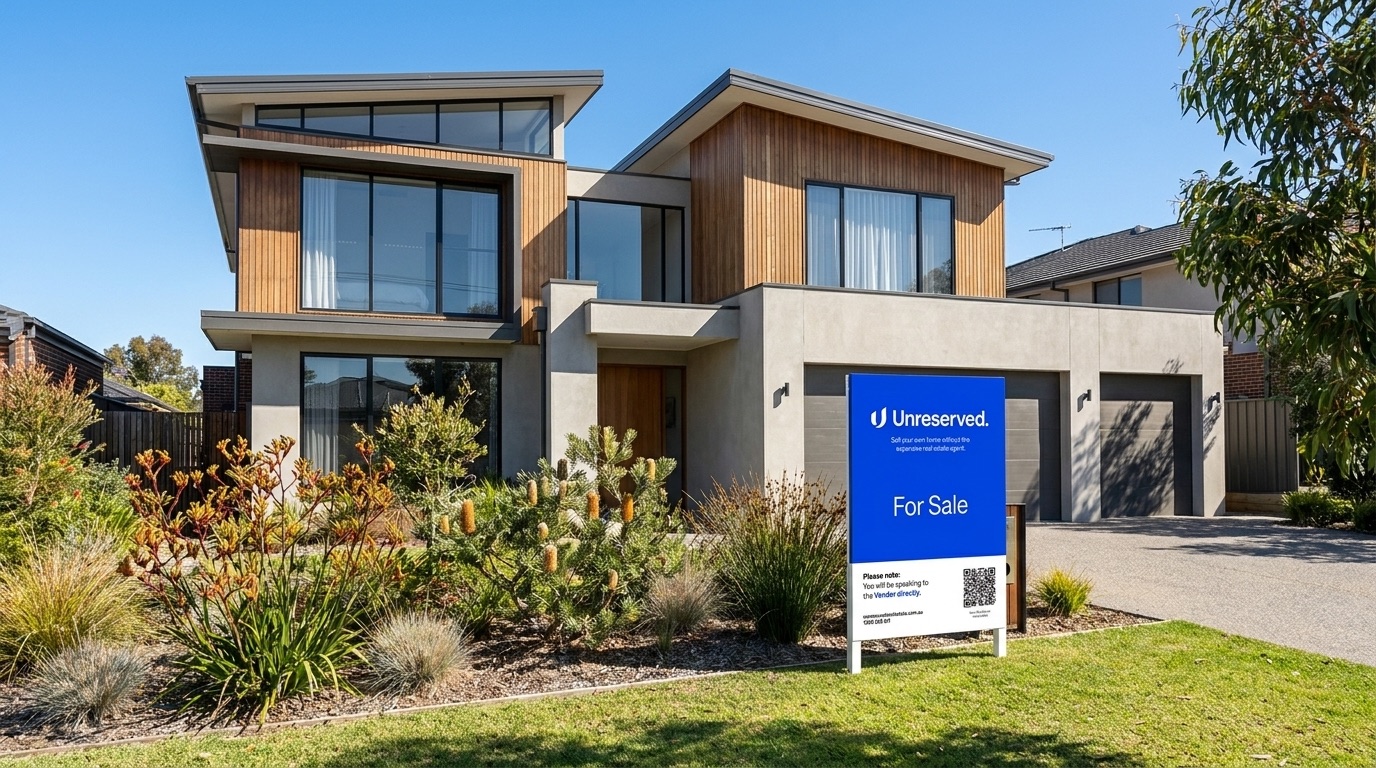
A proper private sale sign solves that in one step. It tells the street the home is genuinely on the market and run properly, and it routes enquiry straight to you instead of an agent’s database. When I built Unreserved, signage was never an optional extra to be upsold. A branded signboard is part of the campaign, so your private sale looks as polished on the street as anything an agency lists, without the commission attached to it.
That is the difference between selling privately and selling alone. A DIY listing platform leaves you to source your own board and hope it looks the part. Unreserved gives you the professional sign, the portal listing and the AI pricing and buyer matching behind it, for one flat fee instead of a percentage of your sale. You can see exactly how the whole process runs in how Unreserved works.
How selling house signs work with online advertising
A sign should never be the whole campaign. It is one channel in a system, and it performs best when every channel points at the same place. Think of the board as the local end of a marketing funnel that runs all the way through to your online listing.
Here is how the pieces connect. Someone drives past and notices the board. They scan the QR code or search the address, and land on your realestate.com.au or Domain listing, where the photos, floorplan and price guide do the selling. From there they book an inspection, the sign confirms the address when they arrive, and the listing they already saw is reinforced in person. Social and email enquiry feed the same listing from the other direction. The sign starts the journey for local buyers, and the online listing closes it.
This is why dropping the sign to save money is a false economy, and why a sign on its own is not enough either. According to Moneysmart, the government’s financial guidance service, marketing and agent fees are the two biggest selling costs for most Australians, and both leave room to negotiate. The smart move is not to cut marketing to zero. It is to fund the few channels buyers respond to, the strong online listing, professional photography and the signboard, and stop paying for prominence you do not need.
Common mistakes to avoid with property signage
After thousands of campaigns, I see the same signage errors over and over. Each one quietly costs enquiry.
- A cluttered, hard-to-read design. Too much text, too many fonts, low contrast. If a driver cannot read it at a glance, the board is decoration, not marketing.
- Missing or buried contact details. A sign with no obvious way to enquire, or a phone number too small to read, throws away every drive-by lead it could have generated.
- No QR code. Without one you are asking a passer-by to remember an address or number until they get home. Most will not. A QR code captures them on the spot.
- Poor placement. Tucked behind a hedge, facing the wrong way, or set too low to see over the fence. Great design cannot fix a board nobody can see.
- A tired or faded board. A weather-beaten, sun-bleached sign signals a stale listing that has been sitting for months. It works against you.
- An oversized board that sells the agent, not the home. The giant photo board with the agent’s face larger than the house is brand-building for them, and you are the one paying for it.
Fix these and your sign quietly does its job every hour of the day. None of them cost anything to avoid. They just take a little attention most campaigns never give.
How much do selling house signs cost?
Signboards are one of the cheapest items in any campaign, which makes the markup on the large ones all the more telling. Here is what the common types cost and what drives the price.
| Sign type | Typical cost | Best for |
|---|---|---|
| Standard signboard | $100 to $300 | Most homes. Does everything a board needs to do. |
| Large photo board | $300 to $900+ | Higher profile listings, though much of the cost is branding |
| Corner or double board | $200 to $600 | Corner blocks and high-traffic frontages |
| Flat-fee platform (bundled) | Included in one price | Sellers who want the board built into the campaign cost |
The standard board does the job for almost every home. The jump to a large photo board rarely reaches more buyers. It mostly buys size and, on an agency board, prominence for the agent’s brand. Read the board outside any sold home and look at whose name is biggest. You are usually the one funding it.
The bigger picture is how the sign sits inside your total selling costs. The board is loose change next to agent commission, which on a typical sale runs 2 to 3 per cent, often $20,000 to $50,000 or more. You can model the difference a flat fee makes with our savings calculator, and the market data behind a smart pricing decision comes from real comparable sales and sources like the Australian Bureau of Statistics, not an agent’s feel for the area.
The bottom line on selling house signs
A selling house sign remains one of the simplest, cheapest and most effective tools for generating property enquiry. It reaches local and drive-by buyers the portals miss, it works around the clock, and a standard board costs barely more than a tank of fuel. Keep the design clean and readable, add a QR code, place it where the traffic can see it, and run it alongside a strong online listing rather than instead of one. Do that and the cheapest line on your marketing schedule will quietly pull in buyers the expensive lines never could.
Frequently asked questions
Do selling house signs still work?
Yes. A selling house sign reaches a buyer pool the portals miss: neighbours, locals who already want the street, and the daily drive-by traffic. It promotes your home 24 hours a day for a fraction of a portal upgrade, and it turns the property itself into the advertisement. Signs work alongside your online listing, not instead of it.
What should a for sale signboard include?
Keep it simple: the words For Sale in large readable type, one clear way to enquire, a QR code that links to the online listing, and one or two genuine selling points such as bedroom count or land size. A photo helps on a larger board. Anything a driver cannot read in three seconds is wasted space.
Where should you place a for sale sign?
Put it at the front boundary, facing the direction most traffic approaches from, at a height that reads clearly from a moving car. Keep it clear of hedges, fences and parked cars. On a corner block, face the busier road. The goal is a clear sightline from the street, not the biggest board on the lawn.
How much does a selling house sign cost in Australia?
A standard signboard runs about $100 to $300. A large photo board can reach $900 or more, with most of that premium paying for the agent’s branding rather than your sale. On a flat-fee platform the board is usually bundled into one price, so you are not billed for it separately.
Can I put up my own for sale sign if I sell privately?
Yes. Selling privately does not stop you using a signboard, and a professional sign is one of the strongest tools a private seller has. A platform like Unreserved supplies a branded board as part of the campaign, so your private sale looks as credible as any agency listing on the street.
Do I need council approval for a real estate sign?
A standard residential for sale sign on private property is allowed in most areas without approval, but size limits and display rules vary by local council and state planning rules. Oversized or illuminated signs can need a permit. Check your local council before installing anything larger than a standard board.

ABOUT THE AUTHOR
Ben Williams
Connect with Ben on LinkedIn →
Ben spent 15+ years as a licensed estate agent and conducted over 2,000 auctions before founding Unreserved. He holds a Bachelor of Applied Science (Property & Valuation) from RMIT and is licensed across VIC, NSW, QLD, SA, and WA.
SELL SMARTER, NOT HARDER
A professional sign, without the commission.
Unreserved bundles your signboard, portal listing and AI pricing into one flat fee. Get a free AI property valuation and see what your sale would cost without an agent.