The Commission Report: where Australians lose the most to agent fees.
A typical Australian home sale still funnels tens of thousands of dollars into agent commission. We mapped what that costs, state by state, and how much sellers keep when they go flat-fee instead.
Australians accept real estate commission as an unavoidable cost of selling. It isn’t. It’s a percentage. On a $1.2M sale that percentage is $24,000 to $36,000.
At the standard rate of 2 to 3% of the sale price, selling a home is one of the largest discretionary fees you will ever pay. Yet you never see it as a number. You see it as “the agent’s cut,” deducted at settlement, gone before the proceeds ever land in your account.
Using median sale prices and typical commission rates across each state and territory, this is what the commission model costs Australian sellers in 2026, and where the gap between commission and a flat fee is widest.
Key findings
- $24K–$36KTypical commission on a $1.2M sale at 2–3%, more than the average Australian earns in six months.
- $1,028,876Australia’s median house value as at 30 April 2026 (Cotality Hedonic Home Value Index).
- NSW & QLDHighest dollar commissions in the country, driven by $1.2M-plus capital-city medians.
- Gap widens with priceThe higher the median in your market, the more a flat fee saves you versus a percentage.
What 2–3% really costs.
Commission is charged on the whole sale price, not on the value an agent adds. On a $1.2M sale, a 2% fee is $24,000 and a 3% fee is $36,000. The work (photography, a listing, open homes, fielding offers) is the same whether the home sells for $700,000 or $1.7M. The fee is not.
The state-by-state picture.
Because commission is a percentage, the dollar cost tracks median price. States with higher medians, New South Wales and Victoria, produce the largest commission bills in the country, even where the percentage rate is no higher than anywhere else.
| State / Territory | Median house value (Cotality HVI, Apr 2026) | Typical rate | Commission paid | Kept with flat fee* |
|---|---|---|---|---|
| New South Wales | $1,600,301 Sydney | 2.35% | ≈$37,600 | ≈$31,600 |
| Victoria | $972,734 Melbourne | 2.35% | ≈$22,900 | ≈$16,900 |
| Queensland | $1,222,906 Brisbane | 2.80% | ≈$34,200 | ≈$28,200 |
| Western Australia | $1,087,507 Perth | 2.75% | ≈$29,900 | ≈$23,900 |
| South Australia | $1,006,099 Adelaide | 2.80% | ≈$28,200 | ≈$22,200 |
| Tasmania | $796,682 Hobart | 3.25% | ≈$25,900 | ≈$19,900 |
| ACT | $1,049,789 Canberra | 2.23% | ≈$23,400 | ≈$17,400 |
| Northern Territory | $732,769 Darwin | 3.00% | ≈$22,000 | ≈$16,000 |
| National illustration | $1,028,876 national median house | 2.40% | ≈$24,700 | ≈$18,700 |
*Illustrative saving = typical commission − an indicative $6,000 flat fee. Figures rounded; for illustration only.
Why the model survives.
Commission persists not because it reflects the cost of the work, but because it’s deducted at the end, bundled into a process you go through only a handful of times in your life. By the time the fee is calculated, the house is sold and you’re focused on moving.
The agent’s incentive runs against yours. A traditional agent earns more when a home sells higher, but also earns when it sells fast and cheap, because a quick sale at a slightly lower price still pays most of the commission for far less effort. The agent has little reason to chase your last dollar.
“You’re paying new-car money for someone to open doors and run an ad. The internet does the hard part now.“
Ben Williams · Founder, Unreserved
What a flat fee changes
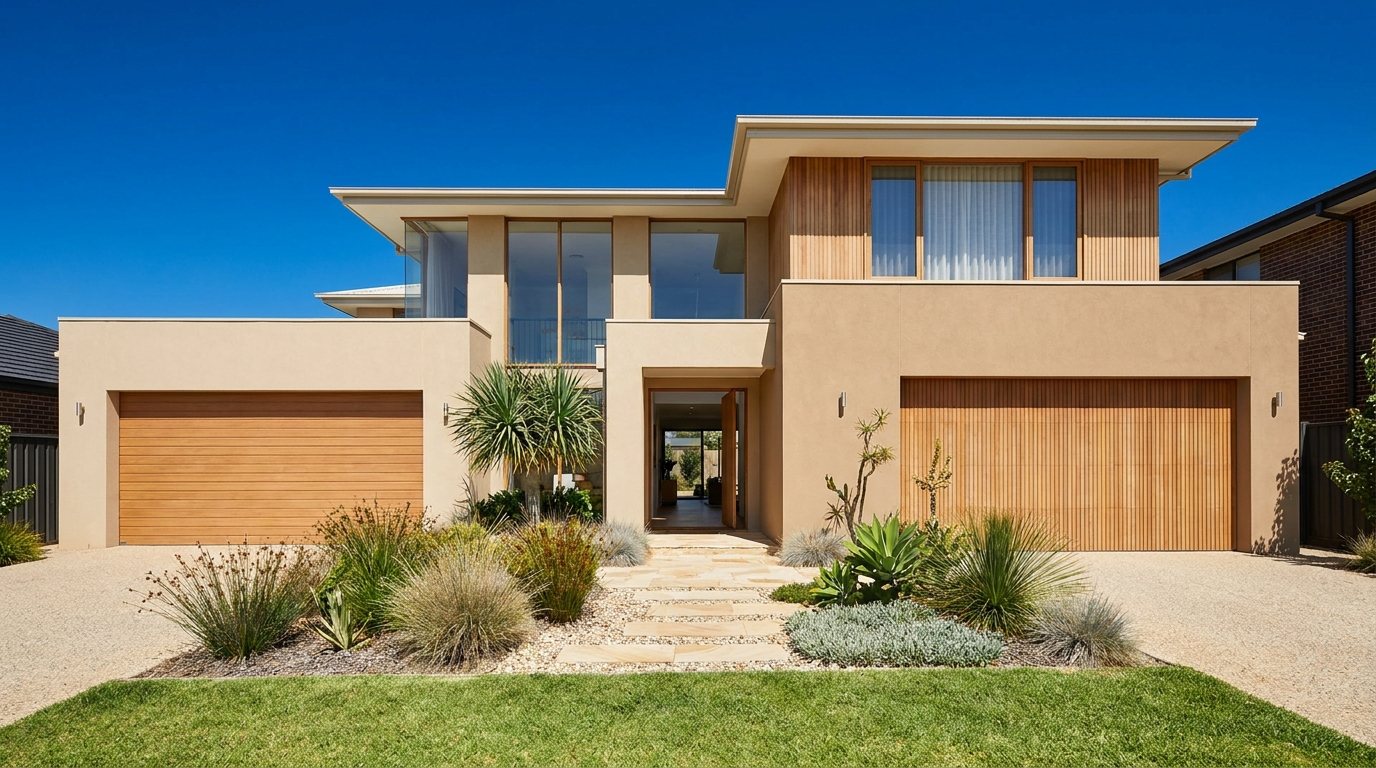
A flat fee breaks the link between the sale price and what the seller pays to sell. The platform earns the same whether the home sells for $700,000 or $1.7M, which means every extra dollar of sale price belongs entirely to you. AI runs the valuation, buyer matching and pricing. Bid-Smart bidding puts every offer in the open. You keep control, and the equity.
What this means for sellers right now.
If you’re planning to sell in 2026, the one number to know before you sign: your commission in dollars, not as a percentage. Multiply your expected sale price by the rate you’re quoted. Then ask what, specifically, that figure buys you that a flat-fee platform doesn’t already provide.
Methodology & sources
Commission figures are calculated as median house value × typical state commission rate. Median house values come from the Cotality Hedonic Home Value Index (HVI) as at 30 April 2026, using each capital city’s median house value as a proxy for its state or territory; national and combined-capital medians are from the same release.
Typical commission rates by state are drawn from 2025–26 industry commission surveys and state-by-state guides (Independent Real Estate Commission, Real Estate Business and other fee-comparison resources), which place typical residential commissions in a national band of roughly 2–3%: higher in Tasmania and the Northern Territory, lower in parts of NSW, Victoria and the ACT.
Flat-fee savings are illustrative only: we assume a notional $6,000 flat fee and calculate the amount kept as typical commission − $6,000. Actual commission and flat-fee charges vary by agent, agency, property type and market. These figures show the structure of the gap between percentage commissions and flat-fee models, not any specific agency’s pricing.
Full data tables and sources available to media on request.
For journalists
Ben Williams is available for interview and commentary on agent commission, the cost of selling, and AI in real estate. We can provide the underlying data set, suburb- and state-level breakdowns, and early access to upcoming editions of this report.
Media enquiries: ben@unreservedrealestate.com.au · Press centre: Press & Media
See what you’d keep.
Get a free AI valuation and your flat-fee saving for your own home.
Get your free valuation